Indonesia’s ratification of ILO Convention No. 188 (ILO C188) on 1 May 2026 marked an important step toward protecting Indonesian migrant fishers, as the Convention provides a framework of protection standards for migrant fishers, particularly through the obligations of flag States to conduct inspections and certification and to ensure the enforcement of working-condition standards on vessels flying their flags. The Convention also requires non-discriminatory protection for migrant fishers regardless of nationality, including through the laws and regulations of the countries concerned.
Bilateral cooperation is one important mechanism for translating Indonesia’s commitments under C188 into practice. Indonesia has established or is in the process of developing bilateral cooperation with several countries, including the Republic of Korea, Taiwan, and China, although each is at a different stage. These cooperation mechanisms therefore need to be continuously advanced and strengthened.
At the same time, the efforts of the Indonesian Government alone cannot address all the risks faced by migrant fishers. Trade unions and organizations assisting workers play an important role in bringing workers’ experiences and needs into policy discussions, identifying gaps in protection, and supporting workers’ access to information, assistance, and remedy.
Businesses and market actors also have an important role in ensuring that responsible fisheries supply-chain practices take labour and human rights risks into account. This can be achieved through due diligence, worker engagement, responsible procurement practices, and the proportional sharing of costs required to meet responsible labour and human rights standards.
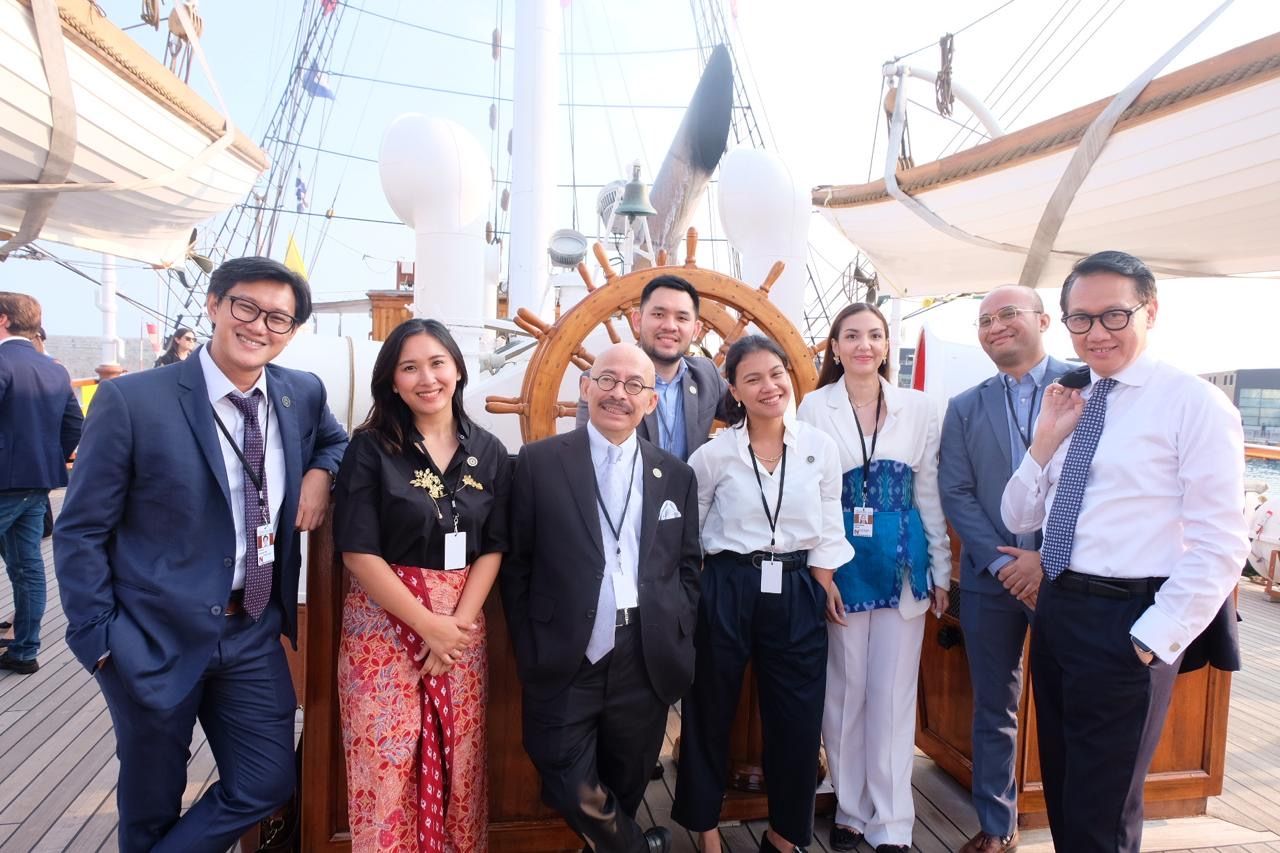
Against this backdrop, the Indonesia Ocean Justice Initiative (IOJI) participated in the 8th UN Responsible Business and Human Rights Forum in Bangkok, Thailand, from 14–17 September 2026. The event brought together governments, businesses, investors, civil society, and rights holders from across the region to strengthen systems that protect human rights amid geopolitical pressures, rapid digital and artificial intelligence transformation, and the impacts of climate change, while promoting resilience that ensures effective prevention, accountability, and access to remedy.
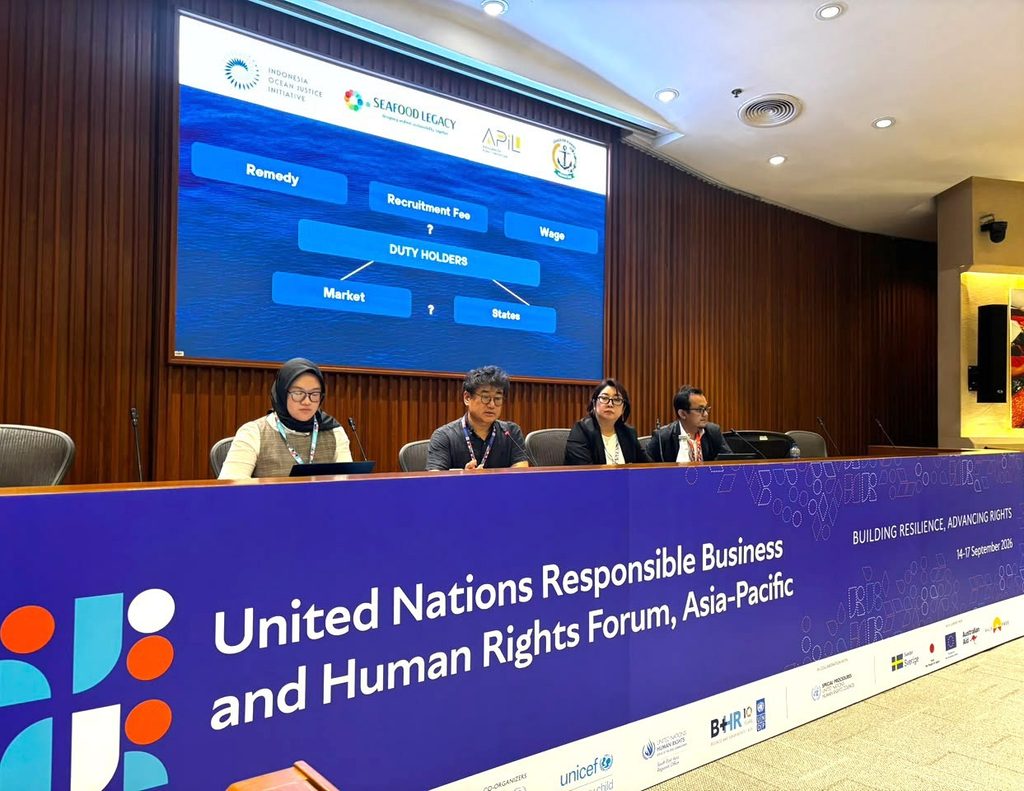
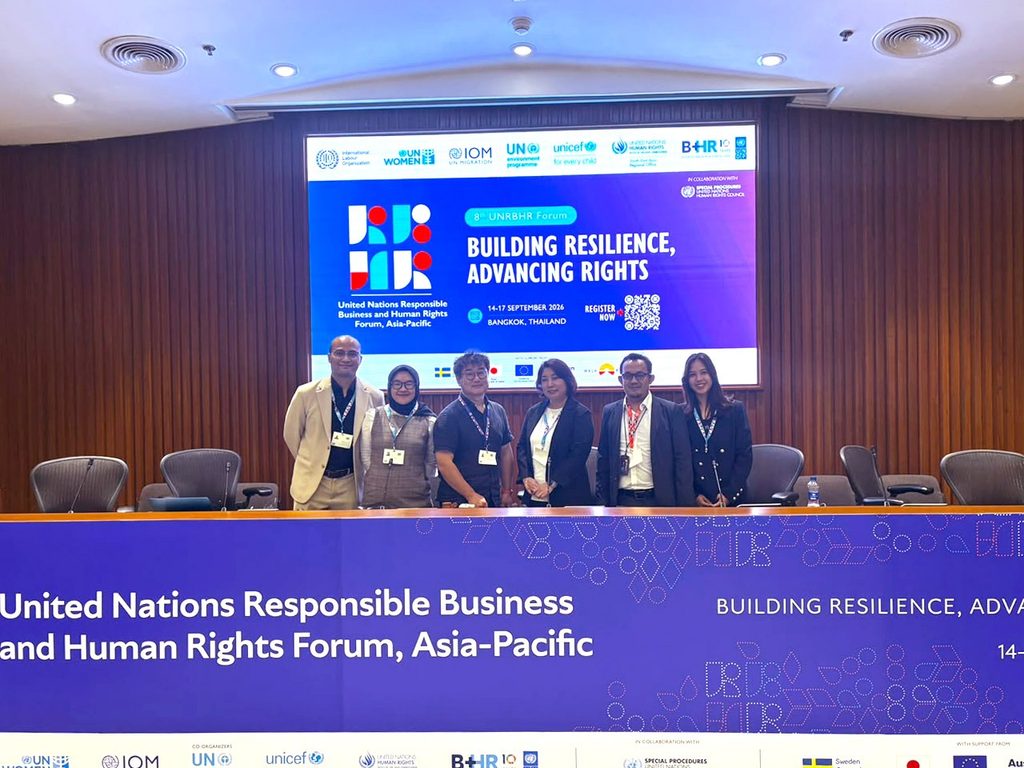
As part of the Forum, IOJI collaborated with Seafood Legacy, Jangkar Karat Indonesia (JKI), and Advocates for Public Interest Law (APIL) in a Spotlight Session entitled “Building Collaboration between Market and States in Advancing the Responsible Seafood Supply Chain in Asia” on 14 September 2026.
IOJI also held an online media briefing on 15 September 2026 to highlight to the media and public the importance of political will from the Indonesian Government to strengthen the protection of Indonesian migrant fishers through the adoption of international standards as both a flag State and a port State, and through the implementation of these standards in line with Indonesia’s commitments under ILO C188.
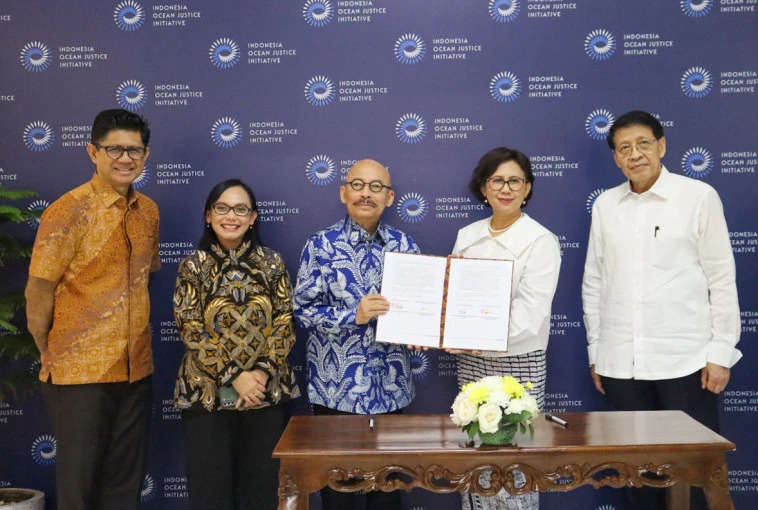
Concluding its activities at the UN RBHR Forum, IOJI and Ocean Outcomes announced the signing of a new Memorandum of Understanding (MoU) to strengthen collaboration on worker rights protection and responsible recruitment across the Indonesia–Taiwan fishing corridor.
Building Collaboration between Market and States in Advancing the Responsible Seafood Supply Chain in Asia
In this discussion, IOJI, together with Seafood Legacy, APIL, and JKI, sought to highlight the protection of migrant fishers by bringing together the efforts and perspectives of States, workers, and market actors. The session was moderated by Anissa Yusha Amalia of IOJI and featured Jong Chul Kim of APIL and Aiko Yamauchi of Seafood Legacy, with Ary Purboyo of JKI serving as a respondent.
IOJI and its partner organizations presented the roles and responsibilities of countries of origin, flag States, and market actors in advancing responsible seafood supply chains; provided practical perspectives on the opportunities and challenges faced by countries of origin, flag States, and market actors in Asia in fulfilling their respective roles; and gathered reflections from representatives of industry, civil society, and migrant fishers on current conditions and opportunities to strengthen cooperation among governments, businesses, and civil society in Asia to advance responsible seafood supply chains.
Ratification of ILO C188: An Important Step Requiring Effective Implementation and Protection Across Jurisdictions
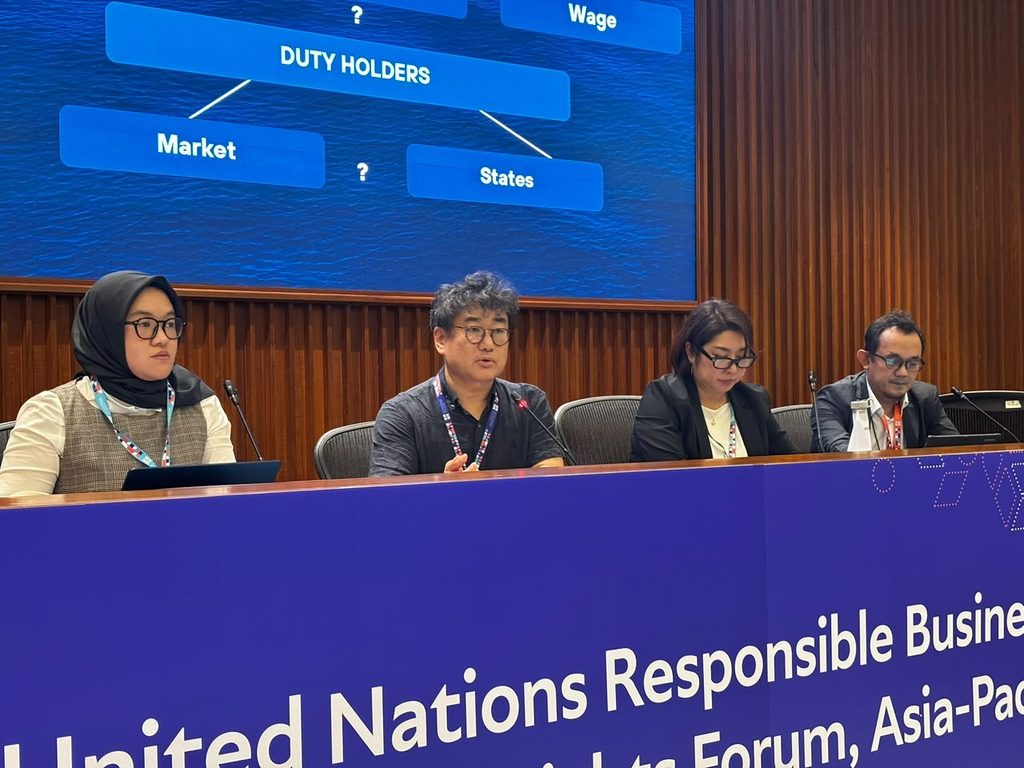
According to Anissa Yusha Amalia, the ratification of ILO C188 is an important step for Indonesia because the Convention establishes minimum standards for the protection and working conditions of fishers. “In the context of protecting migrant fishers, bilateral cooperation is also necessary to ensure effective implementation and protection across jurisdictions,” she said.
The Convention establishes that fishing vessel owners bear primary responsibility for complying with its provisions, while flag States that have ratified the Convention are required to meet the applicable protection standards, including by developing national regulations consistent with these standards and ensuring that vessels flying their flags comply with them. ILO C188 also establishes responsibilities for port States when they become aware of indications that a vessel is applying standards below those stipulated by ILO C188.
The authority of a port State includes the obligation to allow a vessel to enter port when migrant fishers need to be rescued or require emergency assistance, the authority to inspect working and living conditions on board, and the ability to undertake joint enforcement measures when requested by the flag State
Korea’s Role as a Flag State and Port State
The discussion also highlighted Korea’s role as both a flag State and a port State, as well as various policies introduced in 2024 concerning migrant fishers. These policies include prohibiting recruitment fees from being charged to workers under the Employer Pays Principle (EPP), imposing sanctions, and requiring fishing vessels to provide workers with Wi-Fi access. The discussion also emphasized the importance of translating laws and regulations into concrete commitments and implementation, as well as strengthening cooperation between Korea and countries of origin of migrant fishers, such as Indonesia.
According to Jong Chul Kim, one of the most significant recent developments concerning the protection of migrant fishers in Korea was the 2024 Improvement Measures, which specifically focus on migrant fishers working in the distant-water fishing industry. One of the most significant aspects of the policy is that it was developed on the basis of an agreement among the government, civil society organizations, and the fishing industry, represented by the Korea Overseas Fisheries Association.
The policy contains several key measures:
- First, it adopts the EPP and prohibits migrant fishers from being charged recruitment fees or other related costs. If a recruitment agency is found to have charged such fees, the fishing company must terminate its relationship with the agency. If the company fails to do so, it may face sanctions, including reductions in its fishing quota.
- Second, the policy limits voyages without returning to port to a maximum of one year. Violations of this provision may also result in sanctions, including reductions in the company’s fishing quota.
- Third, with regard to Wi-Fi access, all vessels are required to provide migrant fishers with Wi-Fi access for at least three hours per day.
In principle, the policy also requires a minimum rest period of 10 hours per day. In addition, it addresses various other issues, including passports, non-discriminatory access to drinking water, and grievance mechanisms.
However, the policy still has limitations and faces several challenges:
- It is the result of an agreement among the government, civil society, and the fishing industry and takes the form of a government commitment rather than a legally binding provision.
- Because it has not yet been fully incorporated into laws and regulations, there are still limitations regarding its enforcement.
- It was introduced in late 2024. However, recent interviews with migrant fishers conducted by APIL and Jangkar Karat indicate that cases of non-compliance with these provisions continue to occur. Effective implementation and monitoring therefore remain major challenges.
Jong Chul Kim also briefly highlighted two examples of cooperation between the Korean and Indonesian governments in protecting migrant fishers.
- First, a Memorandum of Understanding signed by the Governments of Korea and Indonesia in 2021 concerning arrangements for recruitment fees.
- Second, a more recent case involving an Indonesian migrant fisher. The Korean Government recognized the individual as a victim of trafficking in persons and, after he returned to Indonesia, requested that the Indonesian Government ensure that he was protected against retaliation by the recruitment agency.
Civil society cooperation also played an important role in this case. In the process of securing recognition of the individual as a victim of trafficking in persons, civil society organizations in Korea and Indonesia worked together to engage with the Korean Government. After he returned to Indonesia, civil society organizations from both countries continued their cooperation, this time engaging with the Indonesian Government to ensure that he received the protection he needed against retaliation.
“The case involving this Indonesian migrant fisher is still ongoing, and I believe it can serve as a good example of how governments and civil society organizations in Korea and Indonesia can work together across borders to protect migrant fishers,” said Jong Chul Kim.
Perspective of Market Actors in Japan
From the perspective of Japan’s seafood market, Seafood Legacy highlighted the challenges companies face in assessing labour and human rights risks further upstream in their supply chains. Human rights due diligence was discussed as an ongoing process that goes beyond risk assessment and requires continuous engagement with stakeholders, including civil society organizations, as well as reporting and follow-up.
According to Aiko Yamauchi, market actors need to trace and understand what is happening throughout the supply chain, establish monitoring functions from downstream to upstream, and strengthen the implementation and enforcement of standards at the upstream level. Given the many actors involved across different stages of the supply chain, with varying levels of understanding, strong collaboration among all sectors involved is essential.
“This collaboration allows us to apply a harmonized approach to monitoring how workers are treated upstream and can encourage vessel owners to share data more consistently, in line with requests from different buyers,” she said.
In efforts to meet workers’ needs as stipulated under ILO C188, including the provision of Wi-Fi access on board vessels, she noted that in Japan, Wi-Fi access started to be considered as highly important for supporting worker safety by the several campaigns by CSOs. Such access also enables workers to use grievance mechanisms and communicate freely with their families while working at sea.
“Efforts to improve working conditions at sea should not stop at providing free Wi-Fi access, but should be proactively followed by various measures to improve workers’ health and well-being, so that they can enjoy better working conditions while at sea,” said Aiko Yamauchi.
Migrant Fishers’ Perspective: The Importance of Legal Certainty and Monitoring the Implementation of Seafarers’ Employment Agreements
Ary Purboyo explained that, as a former fisher, he had personally experienced various forms of rights violations. Since 2016, he has assisted in the repatriation of the bodies of 80 migrant fishers and supported approximately 200 fishers in cases involving workplace accidents and labour rights violations.
One of the main factors that traps migrant fishers in exploitative situations is legal uncertainty surrounding Seafarers’ Employment Agreements (SEA/PKL) and the implementation of Collective Bargaining Agreements (CBA). First, the provisions of SEAs often do not comply with Indonesian national and international standards. Second, there may be more than one SEA covering the same employment period, with inconsistencies between the agreements. Third, monitoring of SEA implementation is often neglected or ineffective, both by the Indonesian and Korean governments.
He emphasized that every reform initiative currently being pursued by States and seafood markets must address the following issues:
- Ensure that SEAs incorporate the minimum requirements stipulated under ILO C188. SEAs must be recognized, respected, and enforceable by authorities and private actors, particularly in countries of origin, flag States, and port States. There should no longer be more than one SEA covering the same employment period, and SEAs should be based on CBAs. The participation of trade unions in this process must also be guaranteed.
- Fulfilment of workers’ rights must be the primary objective of case resolution. Resolutions should not stop at enforcement action or repatriation but should continue until workers actually receive the rights to which they are entitled.
- Market actors must participate directly in remedying the rights of workers whose labour supplies seafood to their supply chains. Markets can exert pressure on vessel owners and agencies to comply with human rights standards and guarantee the rights of fishers stipulated in their SEAs.
- Training is an important asset that enables workers to protect their rights by strengthening fishers’ skills and mental resilience in carrying out their work, negotiating, and defending their rights. Support from market actors for such training would, at a minimum, send a positive signal to workers that the global seafood supply chain is committed to improving labour conditions, with an equal partnership among markets, States, and workers serving as its foundation
The Indonesian Government Must Adopt and Implement International Standards as a Flag State and Port State in Line with Its ILO C188 Commitments
“The cases that have occurred demonstrate that the exploitation of migrant fishers does not consist of isolated incidents, but rather reflects a recurring pattern,” said Tasya Ramadhani of IOJI.
According to her, it is difficult to argue that governments and relevant actors are unaware of the problem, particularly given the large number of cases that have already been handled. It is therefore reasonable to question the government’s political will to address the problem systematically. At the same time, business actors collectively—from recruiters and vessel owners to seafood markets—have yet to fully transition toward operations that respect human rights throughout their supply chains. The reasons vary, with limited transparency and accountability among the primary concerns.
There are two important measures that governments and relevant actors must undertake. First is the adoption of international standards by States, both as flag States and port States. Indonesia itself has ratified C188. Second is the enforcement of those standards.
The issue is not simply whether international standards exist or have been adopted, but whether they are genuinely implemented and enforced when violations occur. Enforcement of these standards involves particular complexities because of the nature of migrant fisher cases.
- First, many cases are transnational and involve multiple countries with different responsibilities.
- Second, there are jurisdictional complexities at sea. The handling of a case may depend on where the violation occurred, while State responsibilities differ according to maritime zones.
- Third, it is also necessary to consider how ILO C188 allocates roles and responsibilities, including those of port States.
- At the regional level, there are also RFMO standards and mechanisms, including mechanisms such as high seas boarding and inspection under the WCPFC.
The situation becomes even more complex when cases involve trafficking in persons or forced labour.
- First is victim identification. Individuals may not necessarily be readily identified as victims of trafficking in persons.
- Even after victims have been identified, differences remain in how they receive protection and assistance.
- Countries may also have different perspectives in interpreting standards concerning trafficking in persons.
- Second is the safety of fishers.
- If fishers remain on board the vessel, they need to be rescued because they remain under the control of those exploiting them.
- If fishers are already abroad but no longer on board, or have returned to their country of origin, there may still be a risk of retaliation.
- Third is remedy for violations that have already occurred.
Based on cases handled by JKI, one of the most important concerns for victims is receiving the payments and entitlements owed to them. However, case-resolution processes are often not effective in ensuring that victims actually obtain such remedies.
A major challenge arising from these cases is determining how countries can cooperate to resolve a single case involving multiple jurisdictions. An interstate referral mechanism is therefore needed. Such a mechanism should enable countries to cooperate with a clear division of roles, with the protection of and remedy for fishers as its primary objective. The mechanism should cover victim identification; provision of assistance and support; law enforcement; and remedy.
IOJI views these challenges within the context of Indonesia’s international and regional strategies and commitments. Bilateral and multilateral cooperation is therefore necessary to ensure that these commitments can be translated into effective protection for Indonesian migrant fishers. This includes discussions on how standards are implemented and how the visibility of fishers can be strengthened through visa arrangements—at a minimum, visas that provide standards equivalent to those afforded to national workers and enable fishers to report cases.
However, State commitments and bilateral mechanisms alone are insufficient to address all the risks present in complex fisheries supply chains. It is therefore also important to consider the role of businesses and market actors in complementing State efforts, including by ensuring that worker protection is genuinely reflected in sourcing practices and supply chains. Market actors also have an important role in complementing State efforts to ensure that these protections are effectively implemented.
IOJI and Ocean Outcomes Collaboration to Strengthen the Protection of Workers’ Rights
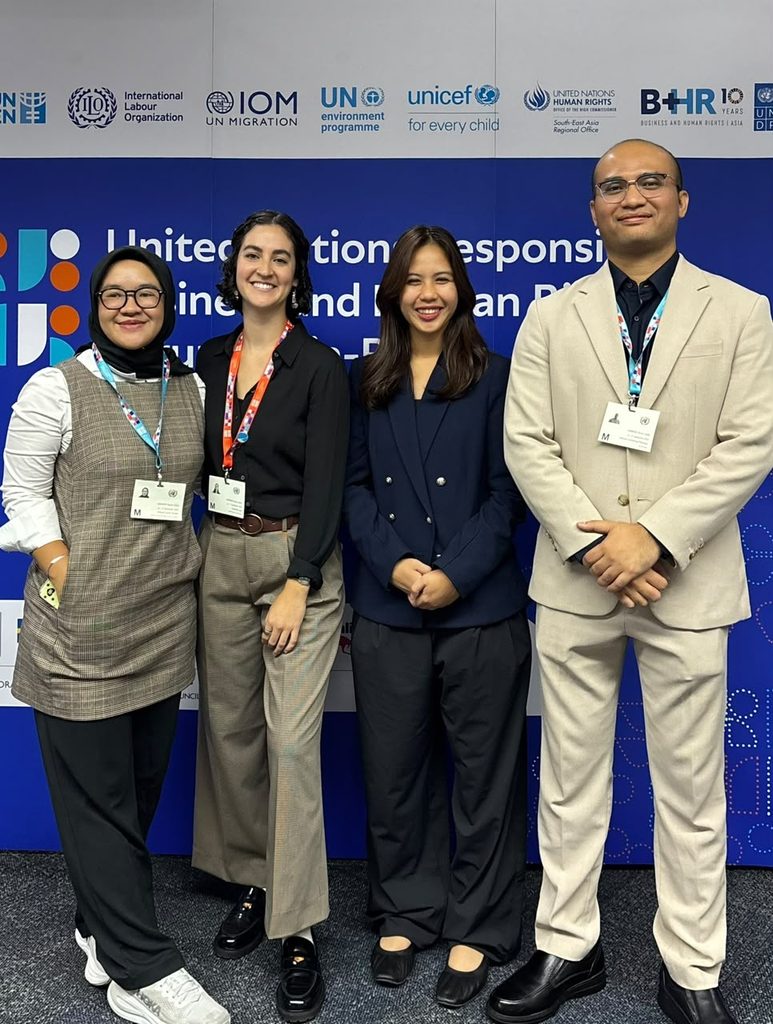
On the sidelines of the 8th UN Responsible Business and Human Rights Forum in Bangkok, Thailand, IOJI and Ocean Outcomes (O2) announced the signing of a new Memorandum of Understanding (MoU) to strengthen collaboration on worker rights protection and responsible recruitment across the Indonesia–Taiwan fishing corridor.
With approximately 70% of migrant fishers in Taiwan coming from Indonesia, the Indonesia–Taiwan corridor is particularly important in efforts to strengthen worker rights protection. Several strategic issues within this corridor require continued joint attention, including recruitment fees and recruitment practices; monitoring and protection of migrant fishers’ rights while working on board vessels, including distant-water fishing vessels (DWF) and vessels operating under flags of convenience (FOC); and access to connectivity for migrant fishers at sea.
The challenges faced by migrant fishers are transnational in nature. Addressing them requires stronger relationships and cooperation among organizations, industry actors, governments, and communities operating at different points throughout seafood supply chains.
Through this collaboration, O2 and IOJI will explore opportunities to work together on:
- Human rights due diligence and worker protection;
- Responsible recruitment practices and reform;
- At-sea connectivity, including Wi-Fi access for fishers;
- Joint research, policy engagement, and advocacy; and
- Stronger networks among governments, industry, and civil society across the region.
By combining IOJI’s expertise and networks in Indonesia with O2’s experience working directly in East Asian fisheries, the collaboration aims to strengthen accountability and worker protection throughout seafood supply chains, while building stronger connections between efforts in fishers’ countries of origin and those in the countries where they work.